What Is Instructional Systems Design (ISD)? – The Process
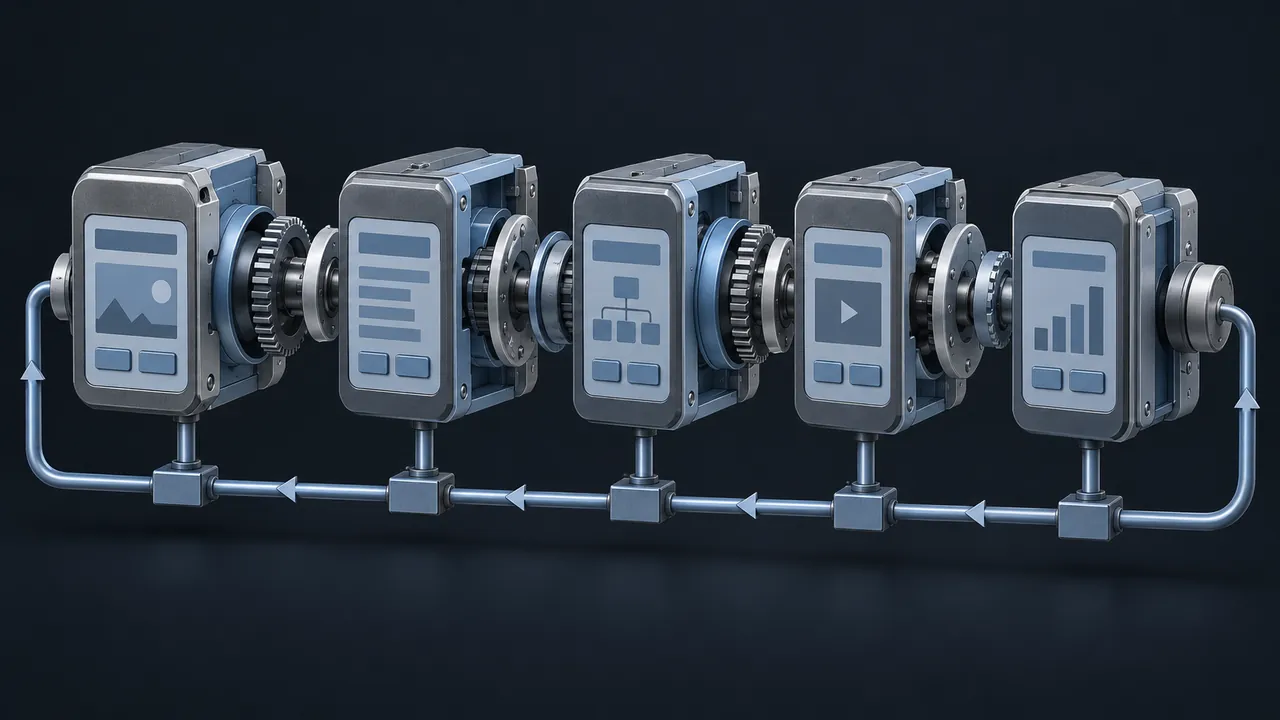
Someone asks you to "build a course" on a new procedure. Where do you start? Gather slides? Interview an expert? Open the authoring tool? Without a process, every project starts differently, and the results vary just as much. Instructional systems design exists to fix that. What is instructional systems design, and what does the process look like from start to finish?
Instructional systems design (ISD) is a structured, evidence-based process for creating instruction, in which you analyze a performance need, design a solution, develop the materials, deliver them and evaluate the results, using what you learn at each stage to improve the others. It treats training as a system whose parts (learners, content, methods, media, environment and assessment) affect one another. The best-known version of the ISD process is the five-phase ADDIE sequence of Analysis, Design, Development, Implementation and Evaluation. Its core promise is consistency: the same questions get asked on every project, so fewer important ones get skipped.
What Does "Systems" Mean in Instructional Systems Design?
"Systems" means you treat instruction as a set of connected parts rather than a pile of content. Change one part and the others shift. A new assessment changes what learners pay attention to. A shorter seat time changes which strategies are possible. A different audience changes nearly everything.
The systems view also includes feedback loops. Information flows forward (analysis informs design) and backward (evaluation results send you back to revise objectives or activities). That loop is what separates ISD from a simple checklist.
Finally, the systems view looks beyond the course. Job conditions, tools, supervisors and incentives are part of the system too. A careful analysis will sometimes conclude that training is not the right fix, and that is a legitimate result of the process.
Where Did ISD Come From?
ISD has practical roots. During and after World War II, the U.S. military needed to train very large numbers of people quickly and reliably. Psychologists, including Robert Gagné, worked on military training research and helped bring behavioral science into how instruction was planned.
Through the 1960s, the "systems approach" spread from engineering and defense into education. In 1975, Florida State University's Center for Educational Technology produced the Interservice Procedures for Instructional Systems Development for the U.S. armed services. That model laid out the analysis, design, development, implementation and control phases that later became widely known as the ADDIE sequence.
Around the same time, academic models appeared. Walter Dick and Lou Carey published The Systematic Design of Instruction in 1978, and Jerrold Kemp offered a more flexible, circular model. All of them share the same logic: decide what people need to be able to do, then build backward from there.
What Are the Phases of the ISD Process?
Most organizations follow five phases. Each answers a different question and produces specific outputs that the next phase depends on.
1. Analysis: What Is the Problem?
Analysis defines the performance gap, the audience, the tasks involved and the constraints. You ask what people are doing now, what they should be doing and why the gap exists. Typical outputs include an audience profile, a task analysis and a statement of whether training is part of the solution.
2. Design: What Is the Plan?
Design turns the analysis into a blueprint. You write measurable objectives, choose instructional strategies, plan assessments and decide on delivery format. A design document or high-level outline is the usual output, and stakeholders sign off on it before anything expensive gets built.
3. Development: Build It
Development produces the actual materials: storyboards, scripts, media, eLearning modules, facilitator guides and job aids. Good teams test rough versions with a few real learners during this phase rather than waiting until the end.
4. Implementation: Deliver It
Implementation puts the training in front of learners. That includes loading courses to a learning management system (LMS), training facilitators, scheduling sessions and communicating with managers so learners have time and support.
5. Evaluation: Did It Work?
Evaluation happens in two forms. Formative evaluation checks quality during the project, through reviews and pilot tests. Summative evaluation checks results after launch, ideally including on-the-job performance, not just test scores.
Try the interactive overview below to see each phase, what it produces and where decisions get made.
If you want a phase-by-phase tour with worked examples, our guide to the ADDIE model goes further into each step.
What Does Each ISD Phase Produce?
A quick reference helps when you are planning a project or explaining the process to a stakeholder.
| Phase | Key question | Typical outputs |
|---|---|---|
| Analysis | What gap are we closing, for whom? | Needs statement, audience profile, task list, constraints |
| Design | How will people learn and show it? | Objectives, assessment plan, strategy, outline |
| Development | What exactly will learners use? | Storyboards, media, modules, guides, pilot results |
| Implementation | How will it reach learners? | LMS setup, schedules, communications, facilitator prep |
| Evaluation | Did performance change? | Review findings, test data, job measures, revision list |
Is Instructional Systems Design the Same as ADDIE?
Not exactly. ISD is the overall approach; ADDIE is the most common model for carrying it out. You can think of ISD as the philosophy (systematic, evidence-based, learner-focused) and ADDIE as one widely used set of steps.

Other models also sit under the ISD umbrella. The Dick and Carey model breaks the work into more detailed steps. The Kemp model treats the components as an interlocking cycle you can enter at different points. Even iterative approaches such as the Successive Approximation Model (SAM) keep ISD's core logic. They simply compress the cycle and repeat it more often.
What Does ISD Look Like on a Real Project?
A short example shows how the phases connect. Consider a warehouse operation that wants new hires to use handheld scanners correctly, because mis-scans are causing inventory errors.
In analysis, the designer watches experienced and new staff at work. It turns out most errors happen on two specific tasks: scanning damaged labels and handling items with more than one barcode. New hires also learn mostly by shadowing whoever is free, so the quality of that shadowing varies a lot. The analysis output names those two tasks as the training priority and flags the shadowing gap as something managers need to address.
In design, the designer writes objectives such as "Given an item with a damaged label, enter the item code manually with no errors." The assessment is a short hands-on check with real items, not a quiz. The strategy pairs a brief demonstration with guided practice on the floor.
In development, the team builds a two-page job aid, a short demonstration video and a checklist for the people who coach new hires. A pilot with a handful of new staff reveals that the video moves too fast at one step, so it gets fixed.
In implementation, supervisors receive the checklist and a short briefing. In evaluation, the team compares mis-scan rates for new hires before and after, and reviews the hands-on check results. Every phase fed the next, and the evaluation plan existed before a single frame was filmed.
What Are the Common Criticisms of ISD?
The most frequent complaint is that ISD is slow and linear, like a waterfall where each phase must finish before the next starts. That criticism is partly fair. Many organizations have run ISD as a rigid, document-heavy sequence, and projects suffered for it.
Still, the original models were never meant to be strictly linear. They included feedback and revision loops from the start. The rigidity usually came from how organizations applied the model, with long sign-off chains and no room for early prototypes.
A second criticism is that ISD can produce "content-first" courses that check every box and still bore people. That risk is real, but it reflects weak design choices, not the process itself. ISD tells you to define performance and evaluate results. It does not tell you to write forty text-heavy screens.
The practical fix is to scale the rigor to the stakes and to prototype early. That is the version of ISD I recommend to most teams: keep the questions, shorten the paperwork.
When Should You Use a Full ISD Process?
Use the full process when the cost of getting it wrong is high. That includes:
- Safety-critical or regulated training, where you need an audit trail of decisions
- Programs that will reach a large audience or run for years
- Projects with several stakeholders who need to agree on scope early
- Situations where the cause of a performance problem is unclear
For a short job aid or a quick update to an existing module, a lighter version works fine. You still ask the analysis and evaluation questions, but the answers may fit on a single page.
Instructional Systems Design Is a Way to Make Better Decisions
Instructional systems design is a systematic process for building instruction that closes real performance gaps. It moves through analysis, design, development, implementation and evaluation, with feedback loops that let each phase improve the others. Its value comes less from the paperwork and more from the questions it forces you to answer before you build.
If your team usually starts by opening the authoring tool, change the order once. Hold a 30-minute analysis meeting before anything else and ask three questions: What should people do differently? How will we measure it? Is training even the right fix? Those three questions are the heart of ISD, and the answers will shape everything you build afterward.