Using AI to Turn SOPs and Manuals into Training
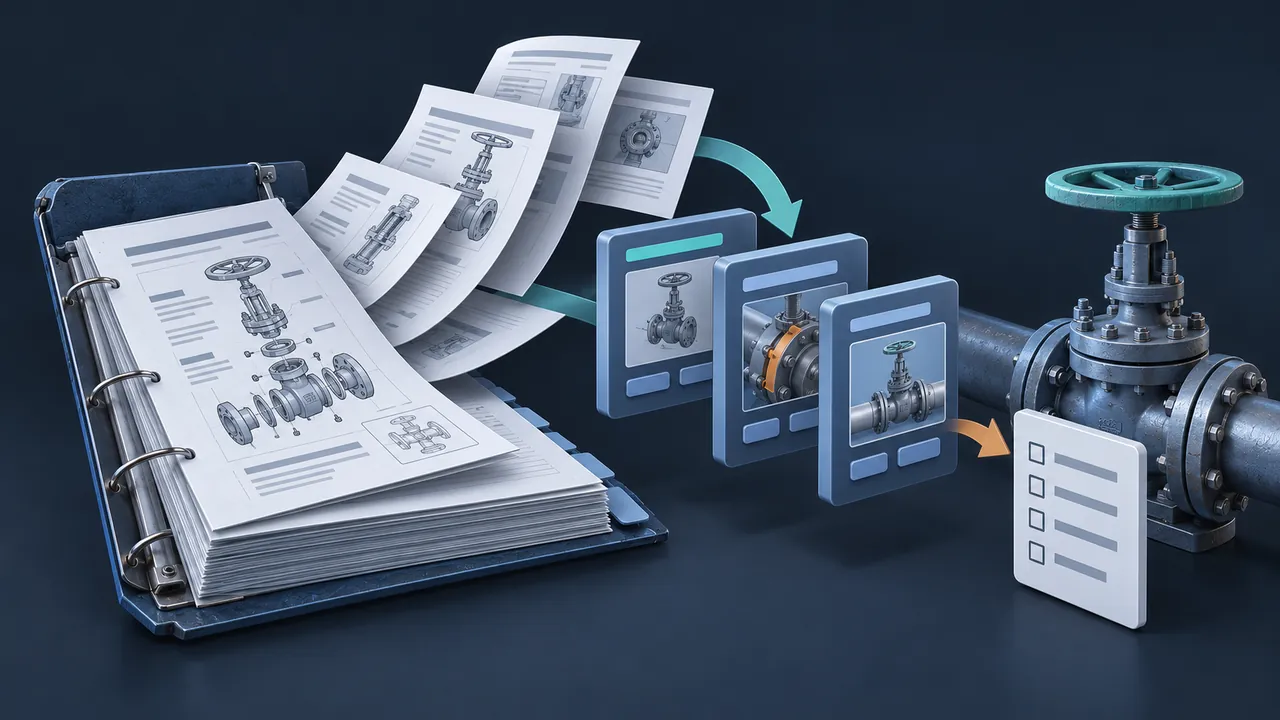
Most operations have a shelf, or a shared drive, full of standard operating procedures (SOPs) and equipment manuals. They are accurate, approved and almost never read cover to cover. New hires get pointed at them and told to "read up," so the knowledge mostly stays on the page. Turning those documents into real training has usually meant days of careful rewriting by a designer. How can an AI SOP to training workflow speed that up without losing accuracy?
An AI SOP to training workflow uses an AI assistant to turn approved procedures and manuals into task-based lessons, job aids, practice scenarios and knowledge checks, while the SOP stays the single source of truth and an SME signs off on every output. You give the assistant the SOP, your audience and your format, then ask it to break the procedure into tasks, draft objectives, write short lessons, build a one-page checklist and create "what would you do" scenarios. You and your SME check every step against the source, so drafting that once took days takes hours.
Why Don't SOPs Work as Training on Their Own?
Because they're written to be complete and correct, not to be learned. An SOP lists every step, every warning and every exception in order, which is exactly what you want for a reference and an audit but not how people build skill.
A new operator reading a 30-page procedure can't tell which steps are routine and which ones will hurt someone if skipped. They don't know what it looks like when something goes wrong, or why step 14 comes before step 15, and training adds that missing layer: priorities, reasons, practice and feedback. Without it, people either memorize the wrong things or skim and hope.
What Can AI Build From an SOP?
AI can draft quite a lot, and quickly. From one well-written procedure, a capable AI assistant such as ChatGPT, Claude, Microsoft Copilot or Gemini can draft:
- A task breakdown that groups steps into stages and flags the critical ones.
- Learning objectives written as observable actions.
- Short lessons, one per stage, that explain what to do and why.
- A one-page job aid or checklist for use on the job.
- Scenarios that ask "what would you do?" when a reading is off, a step is missed or equipment behaves unexpectedly.
- Knowledge-check questions with feedback tied to specific SOP sections.
- Plain-language rewrites for readers who struggle with dense technical text.
- Draft translations for multilingual crews.
Plain language deserves its own mention. The federal government's plain language guide on Digital.gov is a solid reference for what clear writing looks like, and you can paste its key points into your prompt as house rules.
An AI SOP to Training Workflow That Holds Up
- Start with the current, approved SOP. Confirm the revision number before you begin, and use your organization's approved AI tool.
- Tell the assistant who the learners are, where they work and how they'll take the training, for example "new technicians, on tablets, in a loud plant."
- Ask for a task breakdown first. Review it with the SME before anything else is written.
- Ask for objectives and a lesson outline based on the approved breakdown.
- Generate lessons, job aid and scenarios one piece at a time, asking the assistant to cite the SOP section for each point.
- Have the SME review every output against the SOP.
- Build the training in your authoring tool or LMS and pilot it with a few people who do the job.
The citation request in step five is a small habit that pays off fast. When every point in the draft names the SOP section it came from, the SME review goes much faster, and anything without a source stands out right away.
A sample instruction: "Using only the attached SOP, write three short scenarios where a technician notices something wrong during startup. For each, give the correct response and the SOP section it comes from. If the SOP doesn't cover a situation, say so instead of guessing."
Keep the SOP the Source of Truth
The training should never say something the procedure doesn't. That rule keeps you out of trouble in audits and prevents crews from receiving two different answers to the same question.
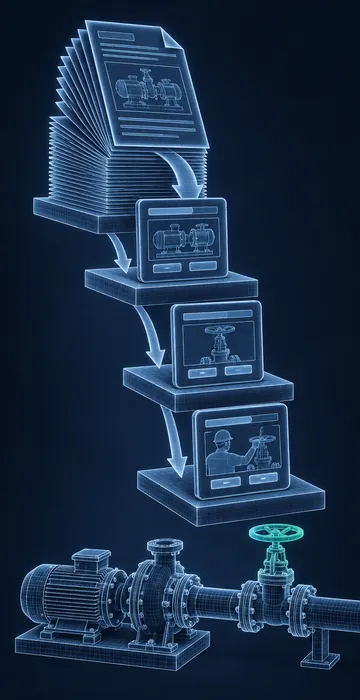
Tie every training piece to the SOP's revision number so that when the procedure changes, you'll know exactly which lessons, job aids and questions to update. This is another place AI helps: give it the old and new SOP revisions and ask what changed, then ask which training items those changes affect. Your SME confirms the list, and the update takes a fraction of the time.
If the AI's draft reveals a gap or a confusing step in the SOP itself, don't patch it in the training; send it back to the SOP owner instead. Training is a great way to find problems in procedures, but the fix belongs in the procedure.
Who Checks What?
| Output | What AI drafts well | Who checks it |
|---|---|---|
| Task breakdown | Grouping steps and spotting critical ones | SME and experienced operator |
| Lessons | Clear explanations and the "why" behind steps | SME for accuracy, designer for flow |
| Job aid | Condensing steps into a checklist | SME, then a field test |
| Scenarios | Realistic "what if" situations | SME and a supervisor |
| Quiz items | Questions and feedback linked to sections | Designer and SME |
The field test for the job aid matters. Print it or load it on a tablet and have someone use it while doing the task, gloves on if that's how the work is done, and revise it if they can't read it or keep their place.
What Format Works Best for Crews?
Keep the training short and close to the work, because a long online course built from a long SOP repeats the original problem in a new format. Ask the assistant to keep lessons to a few minutes each, one stage of the procedure per lesson, with a quick check at the end.
Think about the moment of use as well as the moment of learning. Many crews don't need to memorize a rarely used procedure, but they do need to find the right steps fast when the day comes. For those tasks, the job aid and a short refresher video may matter more than the course. AI can draft all three from the same source, so you can offer the right piece for the right moment.
Finally, make it readable where the work happens: large text, high contrast, plain words and pictures of the actual equipment where you can get them. A checklist nobody can read in bright sun is not much of a checklist.
What About Safety-Critical Procedures?
Use the same workflow with a stricter review, because lockout, confined space, hot work and similar procedures often carry regulatory training requirements, and the training must match the procedure exactly. AI is still very useful for drafting, especially scenarios and plain-language explanations, but the SME and safety lead review should be line by line.
OSHA's resource on developing and delivering training to workers is a helpful reference for designing training that fits the people doing the work, including using clear language and hands-on practice. Many safety skills still need a supervised practical check, and the online piece prepares people for it.
Taking SOP Training Further
Once a procedure is broken into tasks and scenarios, you have the foundation for richer practice, and some teams turn the riskiest procedures into simulations where people can make mistakes safely. If that's on your roadmap, our article on AI VR training looks at how AI adds coaching, voices and feedback to immersive practice.
Let the SOP Lead and the SME Sign Off
An AI SOP to training workflow lets you turn approved procedures into lessons, job aids, scenarios and quizzes far faster than drafting each piece by hand. The rules that make it work are simple: start from the current SOP, ask for a task breakdown first, request section citations, have the SME review everything and tie each piece to the SOP revision.
Choose one procedure your new hires struggle with and run it through the first three steps. Seeing the task breakdown side by side with the original SOP usually shows, very quickly, why people were getting lost.